
standards
What 'Clean Skincare' Actually Means (And Why Most Isn't)
"Clean" is unregulated. Here's the four-question test we use to decide whether a brand earns the word — and how ORLUNE answers each one.
By Orlune Editorial · May 10, 2026 · 6 min read
"Clean beauty" has no legal definition. A brand can put a chalkboard font on a beige bottle, slap a green leaf on it, and call itself clean. So we built a four-question test we apply to every formula — ours included.
1. Is the full INCI list public?
Not just the marketing highlights — every preservative, every emulsifier, every fragrance compound. If the brand hides behind "parfum" or "proprietary blend," they're not clean. They're opaque.
2. Is the supply chain traceable?
We tell you our sea buckthorn comes from a women-led cooperative in Ladakh, harvested in October, cold-pressed within 72 hours. "Sustainably sourced" without a country, a partner, or a date is a stock photo. Demand specifics.
3. Are the actives at functional concentrations?
INCI lists go in descending order by weight down to 1%. If your hero ingredient is below the preservative, it's there for the label, not your skin. Sea buckthorn at 0.01% is fragrance theatre.
4. Does the packaging match the claim?
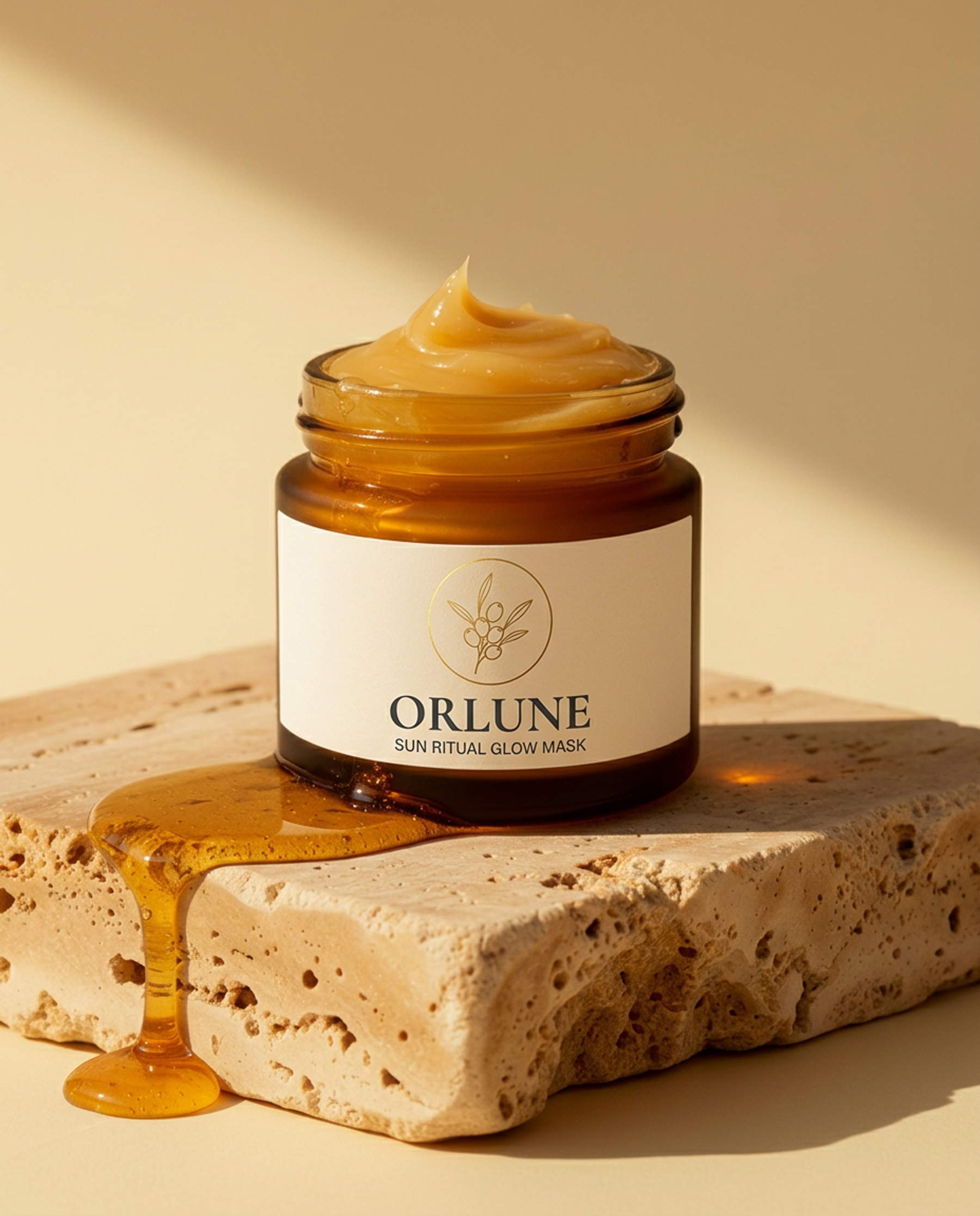
Antioxidants oxidize on contact with light and air. Clear glass bottles + open jars = dead actives by week three. Airless pumps and amber glass aren't aesthetic choices — they're the difference between a working formula and an expensive placebo.
How ORLUNE answers
Full INCI on every product page. Named cooperative, named harvest window, named extraction method. Sea buckthorn at 6–8% — high enough that you can see the colour before we buffer it. Amber glass with airless pumps across the line. That's our test. It should be everyone's.
Frequently asked
Is "clean" the same as "natural"?
No. Many natural ingredients (essential oils, botanical fragrances) are common irritants. Clean means transparent, traceable, and effective — not necessarily plant-derived.
Are parabens really that bad?
The science is mixed. We avoid them because cleaner alternatives exist, not because they're proven harmful at cosmetic concentrations.
Why don't you use essential oils for fragrance?
They're a top sensitizer in dermatology. We use no added fragrance — what you smell is the carrier oils themselves.

